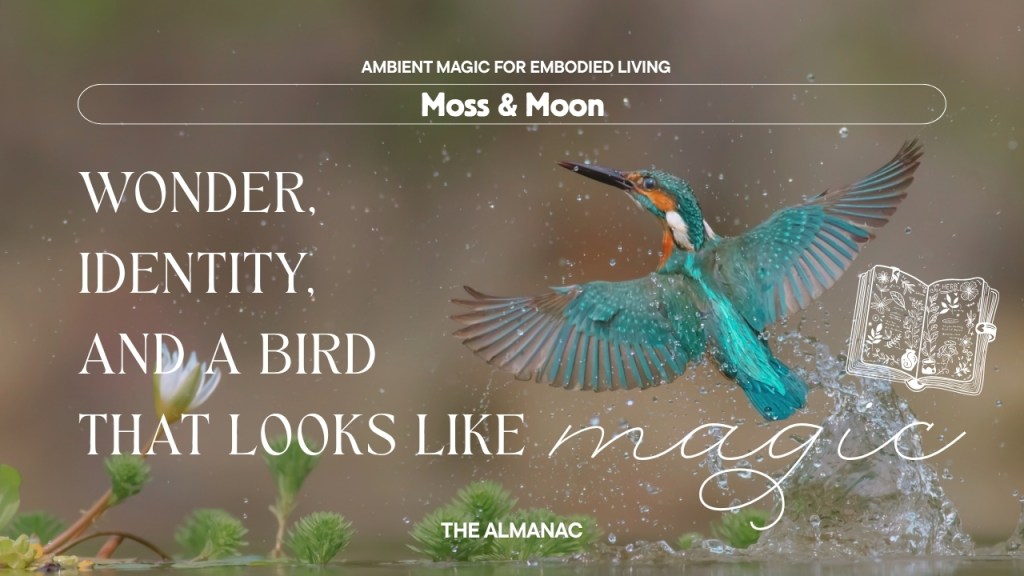
As Kingfishers Catch Fire
by Gerard Manley Hopkins

There are some poems that we read once, appreciate, and then move on without giving it a second thought. You may not have even read a poem since high school or college. Maybe poetry even annoys you. Poems can belong to a particular classroom, a particular season of life, or a particular version of ourselves. And then sometimes there are the poems that seem to take up residence somewhere inside us. The ones that follow us for years, showing up unexpectedly while we’re driving home, folding laundry, listening to music, walking through the woods, or staring out a window when we should be doing something else. Gerard Manley Hopkins’ As Kingfishers Catch Fire has become one of those poems for me.
I am always keeping it around, writing quotes from it, convincing others to read it so they can understood what I love about it, and sometimes I discover something entirely new waiting for me. I think that’s the strange thing about great art. It doesn’t stay the same size because we don’t stay the same. The me who first encountered this poem years ago is not the same person writing these words today, and yet somehow the poem continues to meet me exactly where I am.
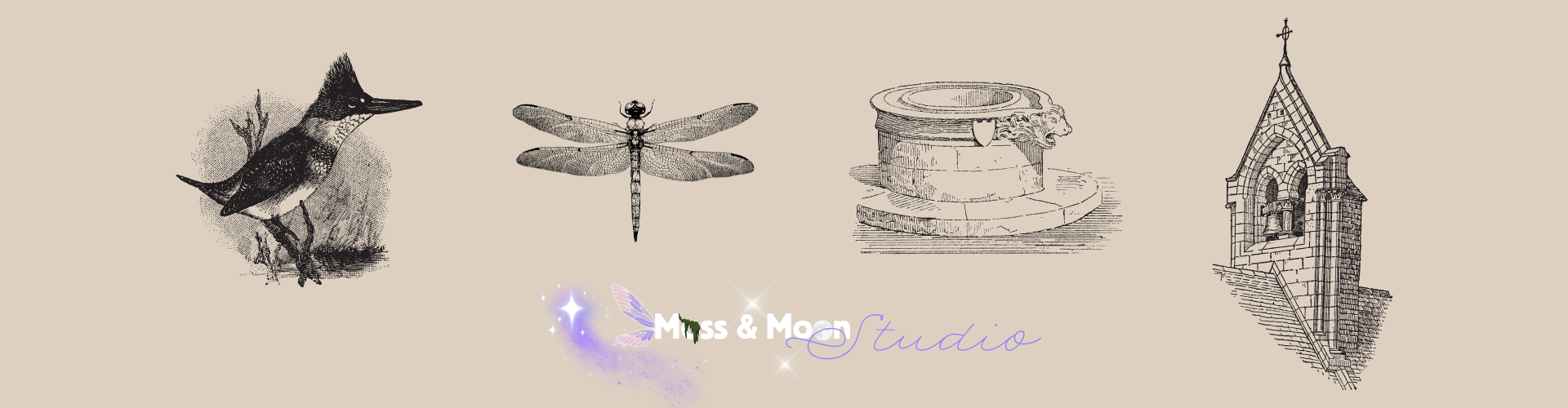
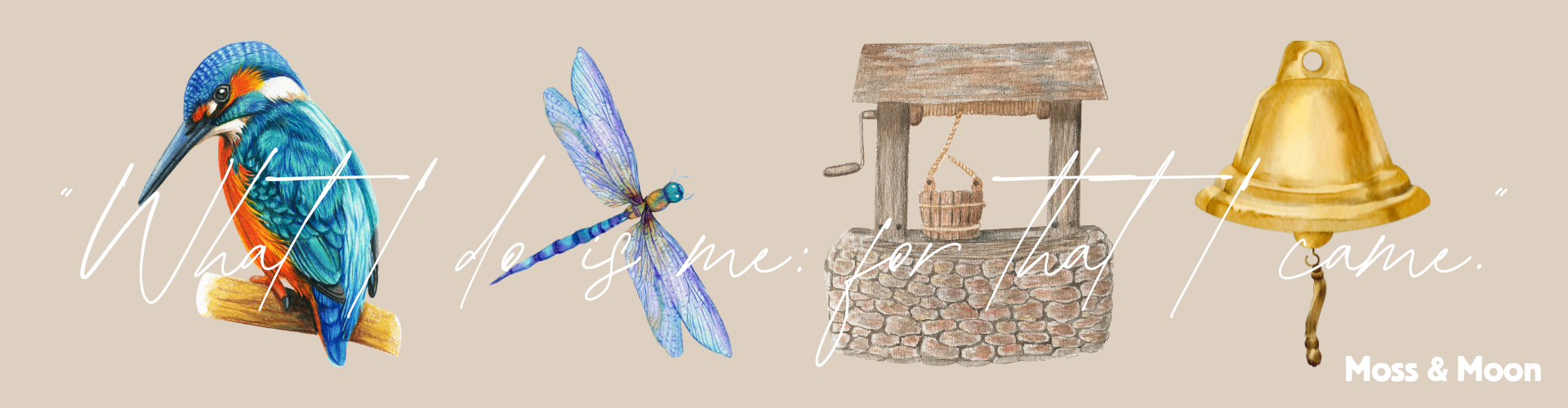
At first glance, As Kingfishers Catch Fire appears to be a poem about observation and nature. Hopkins begins with a bird, a dragonfly, a stone, and a bell. He notices how a kingfisher catches the sunlight and appears to burst into flame, how a dragonfly flashes like living fire, how a stone rings when it falls into a well, and how a bell reveals itself through its own sound. The poem is filled with motion, light, and attention.
But beneath those images lies a much larger idea.
Everything in creation seems to reveal itself simply by being what it is.
The kingfisher does not strive to become a kingfisher. The bell does not compare itself to another bell. The stone does not wonder whether it is successful enough, productive enough, impressive enough, or worthy enough. Each thing simply acts according to its nature, and in doing so announces itself to the world.
The older I get, the more radical that idea feels.
Because human beings seem uniquely gifted at forgetting who they are.
We spend years trying to become something else. More successful. More attractive. More productive. More disciplined. More impressive. We become experts in self-improvement while sometimes remaining strangers to ourselves. Yet Hopkins seems entirely uninterested in self-improvement. He is interested in selfhood. Not becoming someone else, but becoming more fully what we already are.
And somehow, the more I learn about actual kingfishers, the more “my favorite” they are. Now I collect them in lego sets, keychains, little plushies, stickers on every planner and journal I own.
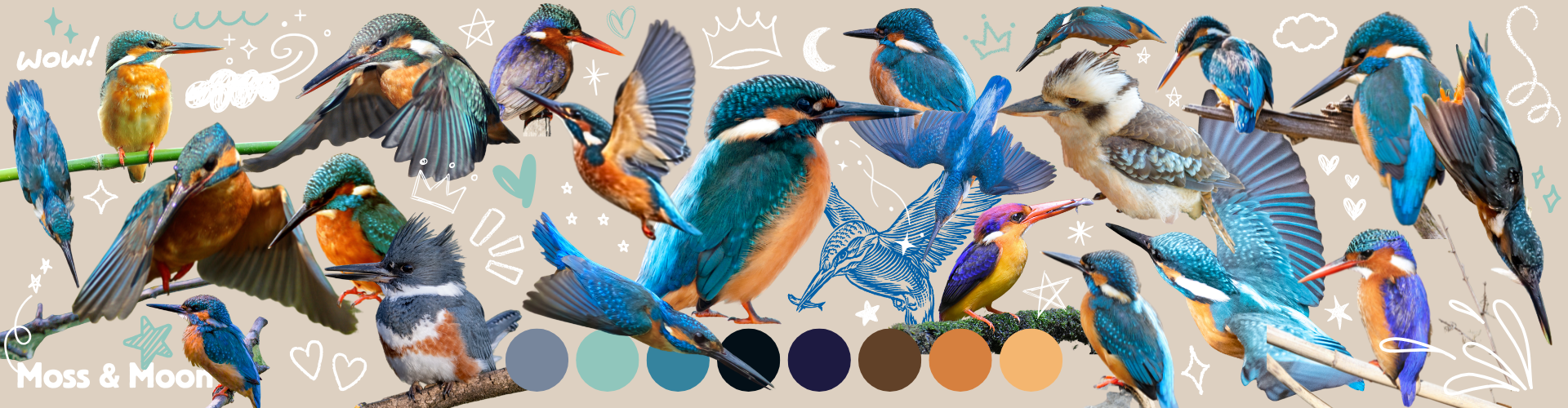
At first glance, kingfishers almost feel unreal. Their famous electric-blue feathers are not actually blue in the way we normally think of color. Unlike a blue flower or a blue pigment, the kingfisher’s flashy, fire-like coloration comes from microscopic structures within the feathers themselves that bend and scatter light. Depending on the angle, the same bird can appear surprisingly ordinary one moment and impossibly radiant the next. Early naturalists often described them as flashing, sparkling, or burning in the sunlight. To me, it’s almost as if each feather is made of crystals or prisms.
What fascinates me even more is that kingfishers spend much of their lives at thresholds and in-betweens. They perch quietly above rivers and streams, watching the rippled, moving surface of the water with astonishing concentration, somehow accounting for reflections, and distortions before diving at remarkable speed toward prey hidden beneath the surface. They live where worlds meet, a resident of both water and air, light and shadow, surface and depth, stillness and movement.
In many ways, they seem perfectly suited to a poem about identity because they themselves inhabit places of transformation and I often find myself a million parts at once.
I think that much of human life is lived in similar spaces. Between who we were and who we are becoming. Between certainty and curiosity. Between survival and flourishing. Between the stories we’ve inherited, the narratives we’re healing, and the stories we’re writing.
Kingfishers flash.
Their brilliance depends on light, movement, perspective, and attention. Most of the time a kingfisher is simply a bird sitting quietly on a branch, easy to overlook if you are not paying attention. Then it turns. The sunlight catches its feathers. And suddenly it becomes unforgettable. Sometimes when I am on a certain hiking trail, I hear the call of a kingfisher across the water, and sometimes I am unable to find it’s colors in the shadow. Other times they sunbathe in the light and are the brightest thing on the treeline.
There is something deeply hopeful about that image.
We often imagine that meaningful people are luminous all the time. Constantly confident. Constantly creative. Constantly wise. Constantly inspired.
Yet perhaps we are more like kingfishers than we realize.
Most days we are simply living our ordinary lives. Going to work. Making dinner. Folding laundry. Driving children to school. Answering emails. Paying bills.
And then every so often something catches the light. The light finds us, and for a brief moment, we catch fire too.
There is a line in the middle of Hopkins’ poem that has followed me for years:
“Deals out that being indoors each one dwells.”

It is such a strange and beautiful way to describe a person.
The idea is that each of us carries an inner reality. A self. A soul. A nature. And whether we realize it or not, we are constantly sharing it out into the world through our words, our habits, our attention, our creativity, our relationships, and our choices.
We reveal who we are whether we intend to or not.
The stories we carry about ourselves echo across many different chapters of our lives, and those stories do not stop with us. Every day, the layers we carry meet the layers carried by other people. We accidentally hurt one another. We accidentally heal one another. We misunderstand, encourage, disappoint, inspire, wound, and love one another, sometimes intentionally and sometimes without realizing it. Every person we meet is carrying an entire history inside them, just as we are, and all of those histories are constantly interacting in ways both visible and invisible.
Maybe that’s why identity matters so much. Not because self-discovery is some form of self-obsession, or because we can’t change, but because who we become affects everyone around us.
And then comes the line that absolutely undoes me every time:
“What I do is me: for that I came.”

There is something profoundly liberating about that in a culture obsessed with performance. I will be honest in my own life that I often define myself IN and OF my performance.
I think many of us secretly believe we need permission to become ourselves. Or, proof to earn it. Permission to create. Proof we’re allowed to rest. Held receipts to delight in strange things. Permission to stop chasing.
Hopkins seems completely uninterested in that game. The kingfisher catches fire because that is what a kingfisher does. The bell rings because that is what a bell does. The stone sounds because that is what a stone does.
And perhaps the deepest work of a human life is learning how to do the same.
The final lines of the poem take the idea even further. Hopkins suggests that every time a person becomes more fully who they were created to be, something of Christ becomes visible through them. Not despite their individuality, but through it.
For a long time I assumed holiness meant becoming less myself and more something else, something different. But Hopkins suggests something entirely different. He suggests that grace and faith does not erase individuality.
It FULFILLS it.
The most Christlike version of a kingfisher is a kingfisher.
The most Christlike version of a dragonfly is a dragonfly.
And perhaps the most Christlike version of a person is not a copy of someone else, but the fullest and truest expression of who God created them to be.
Maybe that’s why I keep returning to this poem.
Because every time I do, it gently turns my attention back toward wonder. Back toward presence. Back toward identity. Back toward the possibility that the deepest work of a human life is not self-invention but self-discovery.
The kingfisher catches fire.
The bell rings.
The stone sounds.
And perhaps our task is much the same.
To become so fully ourselves that the light within us can no longer help but shine through.
One of the things I love most about Gerard Manley Hopkins is that he was never satisfied with meaning alone. He was obsessed with sound, and the connection between sound and meaning.
Read “As Kingfishers Catch Fire” silently and you’ll find a brilliant meditation on identity, purpose, and becoming. Read it aloud, however, and something else happens. The poem begins to come alive.
Listen to the opening line:
As kingfishers catch fire, dragonflies draw flame.
The repeated sounds flash and flicker. The dr and fl combinations seem to dart and skim across the line just as dragonflies skim across a pond. Hopkins was deeply interested in the relationship between sound and meaning. He believed that language should not describe a thing but participate in it, too.
Throughout the poem, bells ring, strings tell, stones ring out from wells. Words echo one another. Sounds answer other sounds, and sounds echo even the meanings of the word. The poem is full of little verbal reflections, as though Hopkins were placing prisms beside ponds and watching the light bounce between them.
Even the poem’s central idea, that every created thing expresses its own unique nature, is reinforced by the music of the language itself. The kingfisher does not merely exist. It catches fire. The dragonfly does not merely move. It draws flame.
Hopkins understood something that modern readers often forget: meaning is not only carried by language. Sometimes it is carried by rhythm, texture, repetition, and sound. Sometimes the way a poem feels in the mouth is part of what it means.
Before you leave this field study, I want to offer a small challenge.
Read the poem out loud. Let the sounds be present and let meaning follow.
Notice the bells ringing. Notice the repeated consonants. Notice the way certain words seem to leap and flash while others settle and hum. Listen for the music Hopkins wove into the poem more than a century ago.
Think about the bird perched motionless above the water, suddenly becoming a streak of impossible color. Think about the dragonfly flashing in the sunlight. Think about Hopkins’ conviction that every created thing carries something unique within it and spends its life expressing that gift.
Like the kingfisher, we spend our lives catching the light in our own particular way.
So read the poem aloud. Listen closely and then ask yourself:
What is it that only I can bring into the world?
🌙🥂
As kingfishers catch fire, dragonflies draw flame
by Gerard Manley Hopkins
As kingfishers catch fire, dragonflies dráw fláme;
As tumbled over rim in roundy wells
Stones ring; like each tucked string tells, each hung bell's
Bow swung finds tongue to fling out broad its name;
Each mortal thing does one thing and the same:
Deals out that being indoors each one dwells;
Selves—goes itself; myself it speaks and spells,
Crying Whát I do is me: for that I came.

Í say móre: the just man justices;
Kéeps gráce: thát keeps all his goings graces;
Acts in God's eye what in God’s eye he is—
Chríst—for Christ plays in ten thousand places,
Lovely in limbs, and lovely in eyes not his
To the Father through the features of men’s faces.

Every Moss & Moon Field Study includes a collection of free resources designed to help you move beyond simply reading and into observing, reflecting, and creating meaning for yourself.
For this study, you’ll find a companion Field Journal, printable worksheets, prompts, and reflection pages inspired by the kingfisher, Gerard Manley Hopkins, and the themes of wonder, attention, and becoming. There is no right way to use them. Fill every page, skip around, doodle in the margins, take them on a walk, tuck them into a planner, or return to them months from now when a particular question catches your attention again. There’s no timeline on healing or discovering yourself.
The Field Journal was designed as a half-letter booklet (5.5″ × 8.5″). For the best experience, print double-sided using your printer’s Booklet setting and fold the pages in half along the center. Most home printers and PDF readers include a booklet option that automatically arranges the pages in the correct order for folding.
🪶 Field Study No. 001
Kingfisher
Lesson: Identity
Complete the Field Journal, finish one worksheet, and spend fifteen minutes observing something that catches your attention.
Then claim your badge.
⬇ Download the Field Kit
The accompanying worksheets and activity pages are designed as standard full-page printables (8.5″ × 11″). These can be printed individually, added to a binder, tucked into a planner, or mixed and matched with pages from other Field Studies as your collection grows.
My hope is that these resources feel less like homework and like a small field kit. A place to gather observations, chase interesting questions, and practice paying attention to the world with a little more curiosity than you did yesterday. And unleash your inner child and have fun!
POET’S WORKSHOP
THE LIGHT FINDS US
SPENDING A DAY IN WONDER
COLOR COLLECTOR
ARTIST COLOR COLLECTOR
LISTENING FOR SOUNDS
LOOKING FOR LIGHT
LOOKING TWICE
THE INNER LIGHT SPECIMEN STUDIES
THE LIGHT LOG
WORD CONSTELLATIONS
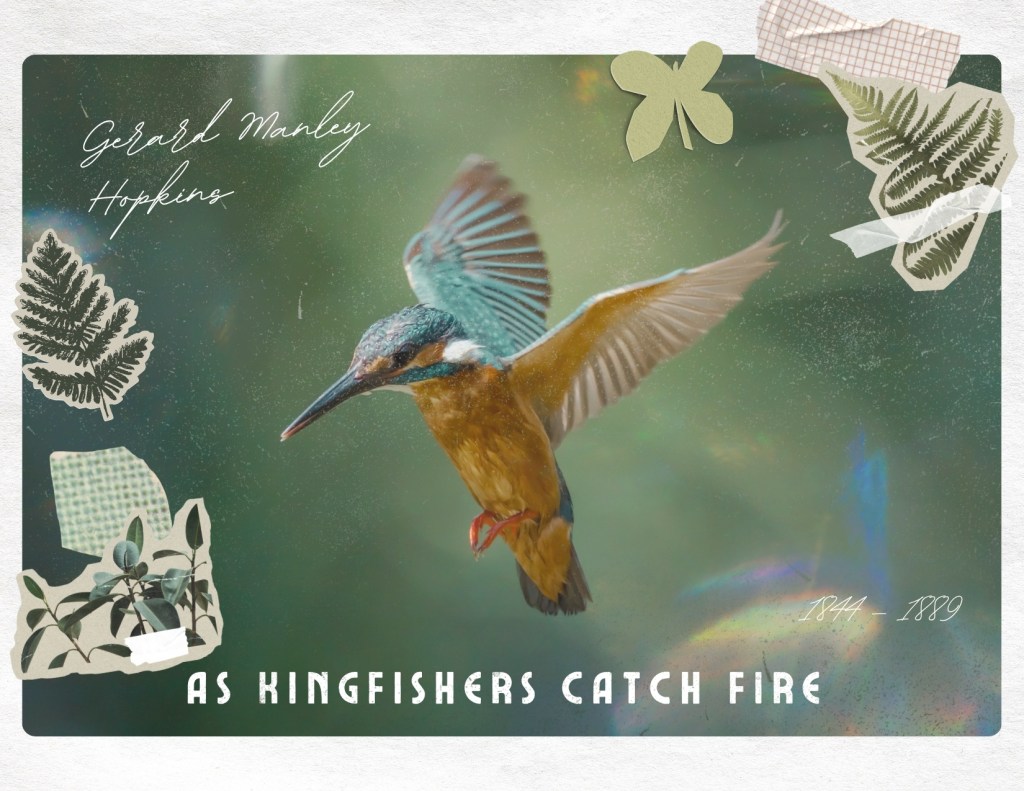
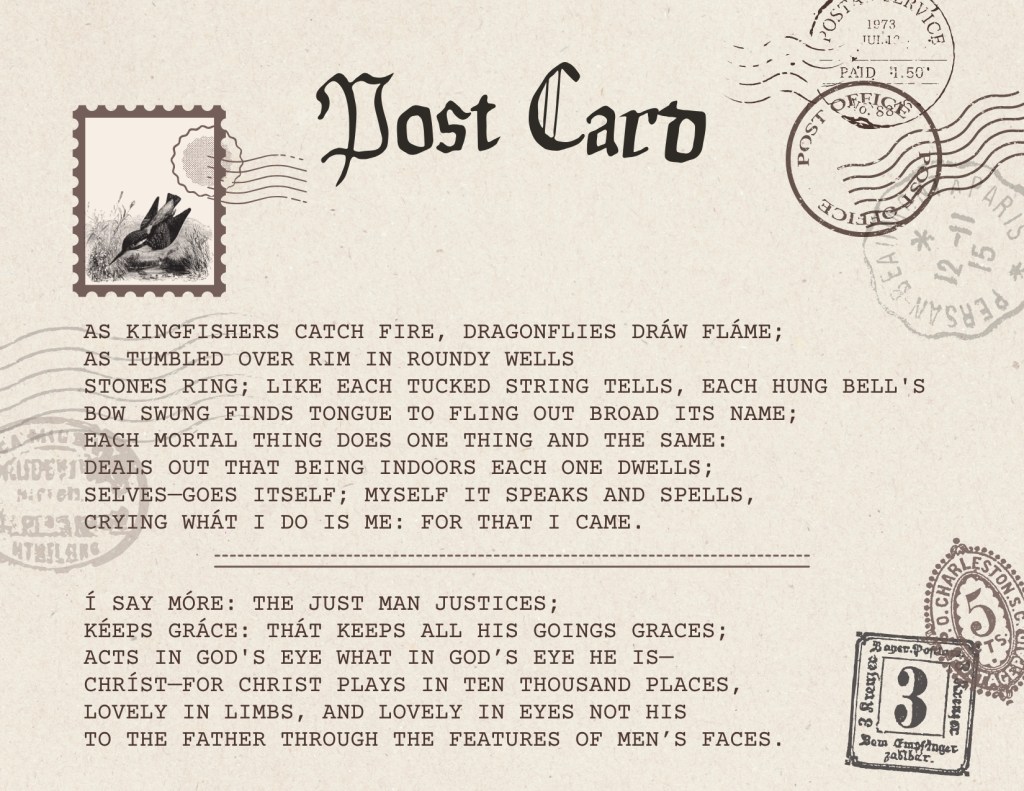
📖 Poem Postcard
As a little keepsake from this Field Study, I’ve included a printable Kingfisher postcard.
You’ll find both sides available as individual JPG files, along with a print-ready PDF version that includes crop marks and cut lines for easy trimming. Tuck it into a journal, leave it inside a favorite book, pin it above your desk, mail it to a friend, or keep it as a small reminder to keep looking closely. Sometimes a tiny piece of art is enough to bring us back to a lesson we want to remember.
Printing Tips
For best results, use the included PDF file and print at 100% actual size. Avoid selecting “Fit to Page” or “Scale to Fit,” as this may slightly resize the postcard and cause the front and back to misalign.
If your printer supports double-sided printing, choose Flip on Long Edge to keep both sides oriented correctly. If you are printing manually, print the front first, reload the paper according to your printer’s instructions, and then print the back.
Once printed, trim along the crop marks using a paper cutter or craft knife for the cleanest edges. For a sturdier postcard, consider printing on heavyweight matte cardstock between 80 lb and 110 lb.
Field Note: Leave this postcard somewhere unexpected and see who finds it.
Happy exploring. 🪶🌙


Leave a Reply